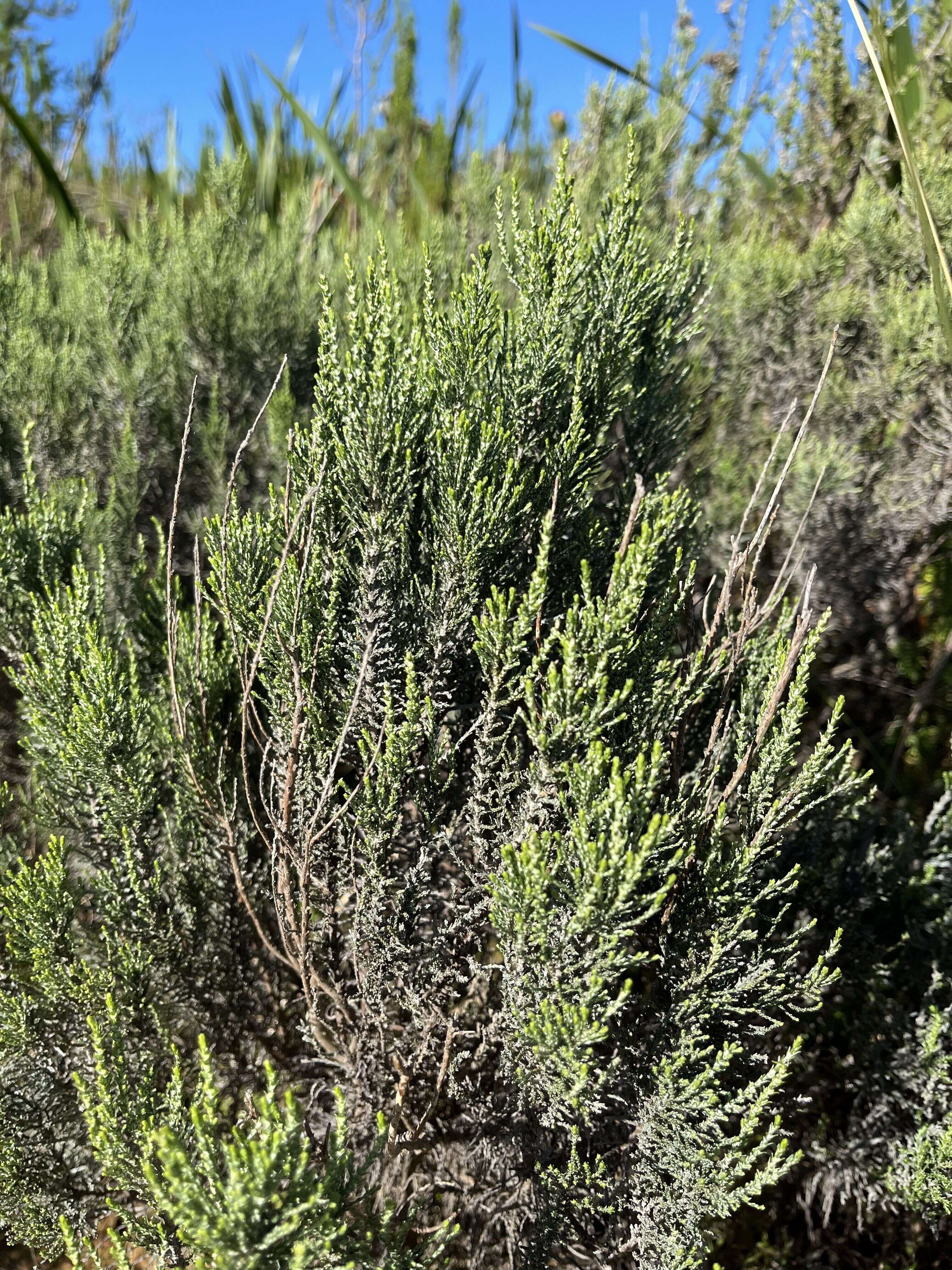
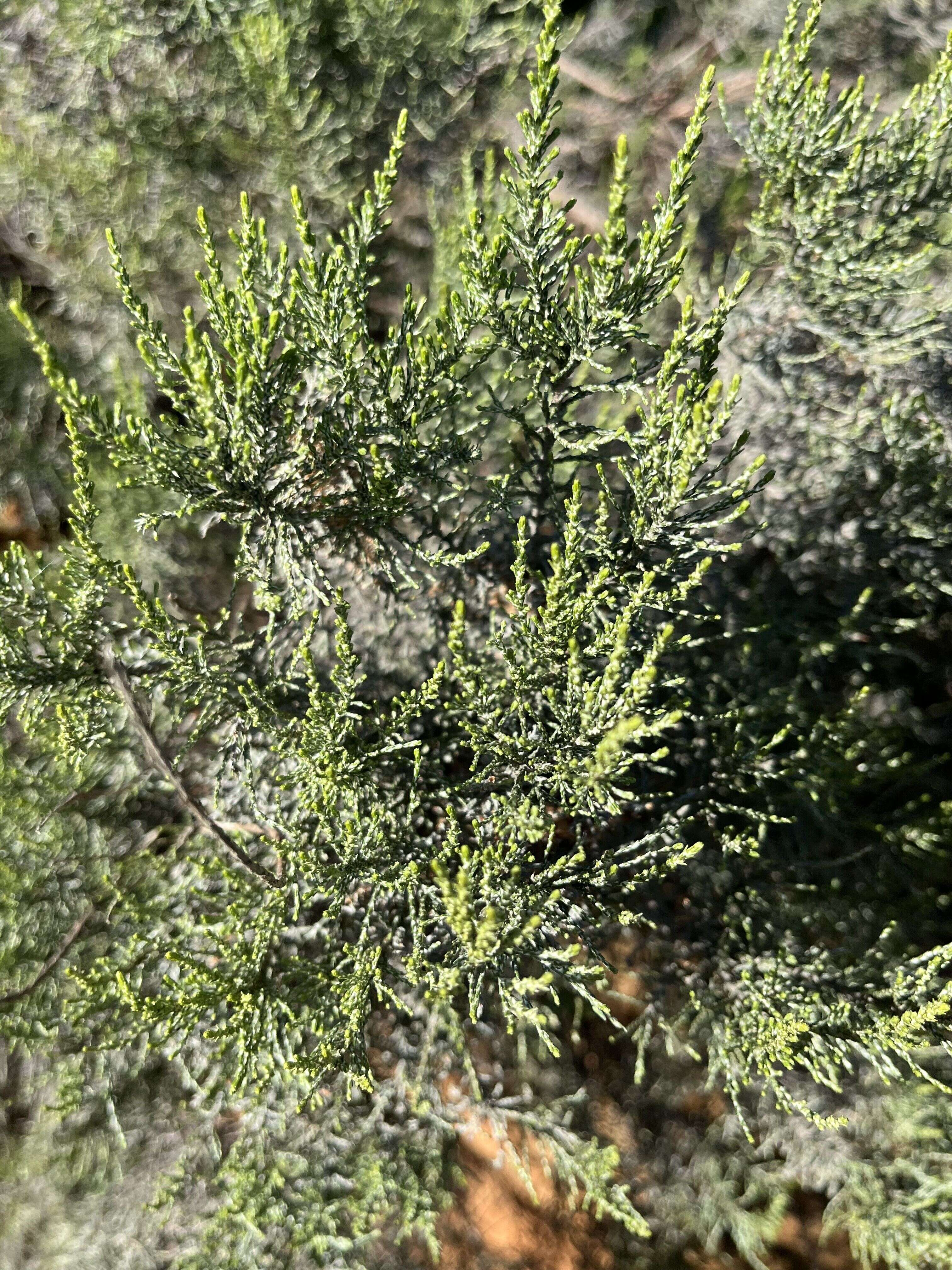
About: Renosterbos is a hardy, grey-green shrub endemic to South Africa. Named "rhinoceros bush," it's the dominant plant in the Renosterveld vegetation type—named after this very species. It's known for its resilience, forming dense stands due to being unpalatable to livestock and thriving in overgrazed areas.
Identification: This low, resinous shrub grows up to roughly 1.5 meters high, with sparsely woolly, greyish stems. Leaves clasp the stem closely and appear scale-like. It produces small, clustered, discoid flower heads at branch tips. Renosterbos is distinguished by its tough, silvery foliage and spindly branching habit.
Habitat: Renosterbos is widespread across the Cape Floristic Region, thriving in renosterveld, fynbos margins, and beyond, reaching as far as the Eastern Cape and Namibia. It flourishes on dry shale and sandstone flats and slopes, particularly where overgrazing has reduced competing vegetation.
Medicinal Uses: Traditionally, the young shoot tips, leaves, and stems are used medicinally. They are prepared as infusions in alcohol or water to treat digestive issues like indigestion and stomach ulcers, and to stimulate appetite. Powdered twigs have been used for watery diarrhea in children. The plant is also applied to induce sweating and treat fevers and influenza. Laboratory studies support its antimicrobial properties—its essential oil has been shown to inhibit microorganisms linked to foot odor and various skin ailments. Additionally, extracts demonstrate notable anti-diarrheal activity and potential antidiabetic effects, while some studies suggest anticonvulsant actions.
History: Renosterbos has deep roots in traditional South African medicine, especially within renosterveld communities. Farmers used it as a field remedy for gastrointestinal issues and fevers, often incorporating it into alcoholic tinctures. Though considered a weed by agriculture, its medicinal legacy persists—and in recent years, pharmacological research has begun validating and building on these uses.