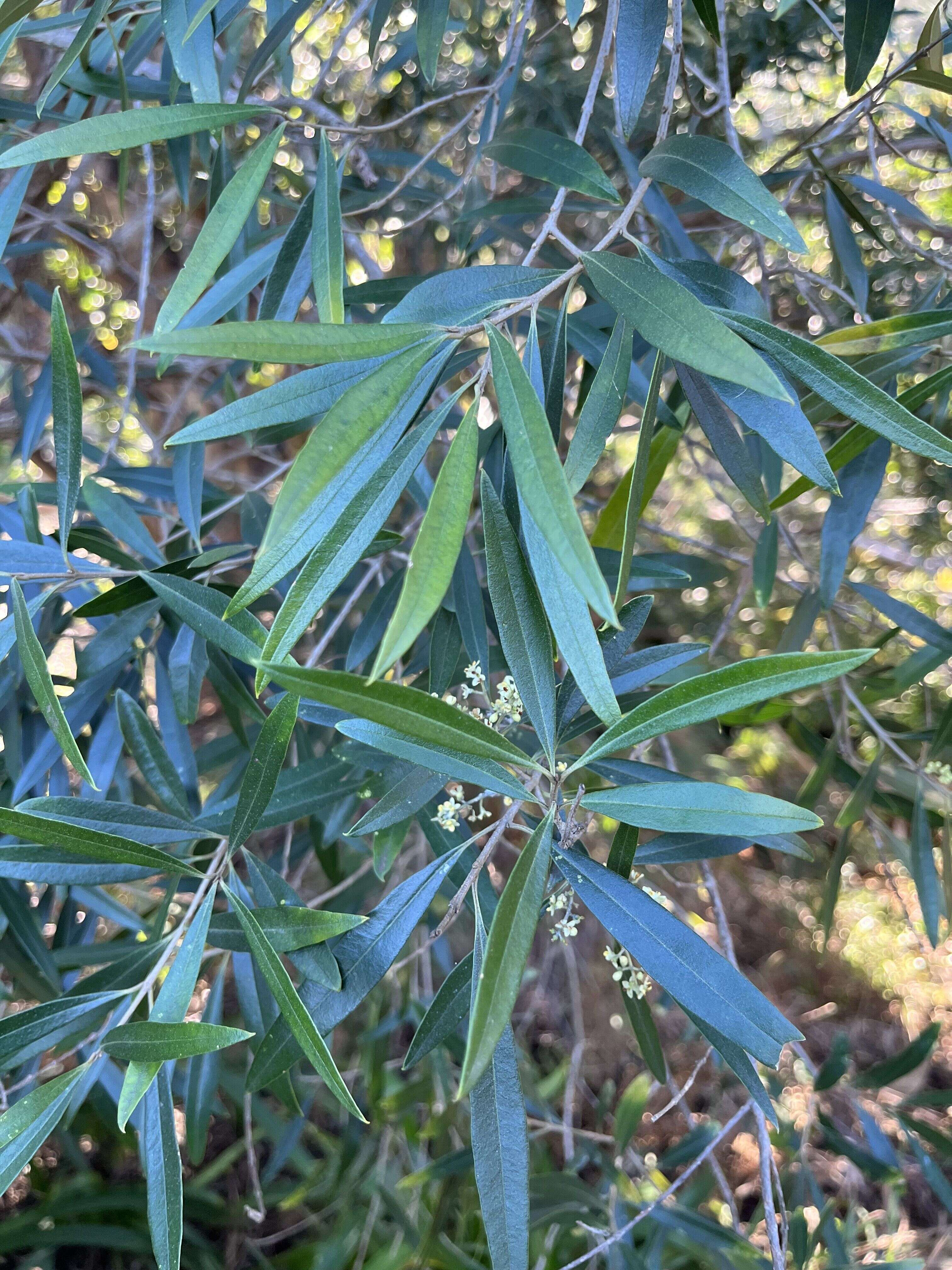
About: Wild Olive is a hardy evergreen tree native to southern Africa, closely related to cultivated olives. It features prominently in local ecology as a resilient species and serves as a hardy garden tree. In traditional medicine, its leaves, bark, and fruit have long been used for their health-promoting properties, especially within rural and indigenous communities.
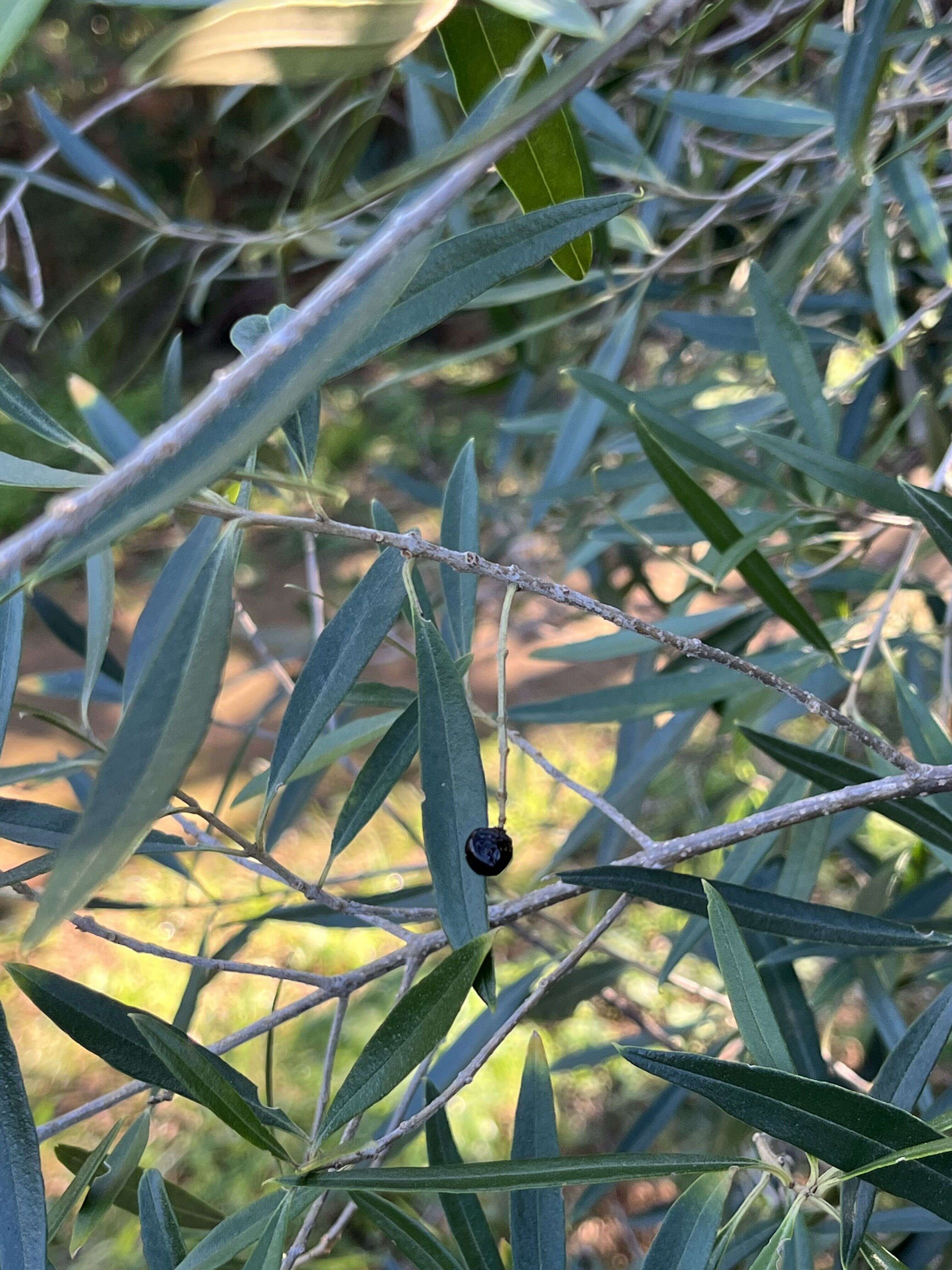
Identification: This evergreen tree typically grows 3–15 m tall and may appear more shrub-like when stunted. It has dense, glossy grey-green leaves that are silvery beneath due to fine, dense scales. The bark is rough and grey, sometimes peeling in strips. It bears clusters of lightly scented white flowers, followed by small, thin-fleshed fruits that ripen from green to purple-black.
Habitat: Wild Olive occurs in a variety of habitats, from forests and riverside bush to open grasslands, often along stream banks and rocky hillsides in South Africa. It is drought-resistant and thrives across a broad range of conditions, making it widespread in eastern and southern parts of the country.
Medicinal Uses: Traditional uses include:
Leaf infusions used as eye lotions, sore-throat gargles, tonics, and remedies to lower blood pressure and improve kidney function.
Fruit used by early settlers to treat diarrhea.
Bark infusions employed to relieve colic.
Research shows that Wild Olive leaves contain high levels of the compound oleuropein (as much as 110 mg/g dry weight), with known antioxidant, antimicrobial, and hypotensive benefits similar to those of cultivated olive leaves.
History: Wild Olive has a long history of utilitarian and medicinal use in southern African traditions. Its Afrikaans name “Olienhout” harks back to early colonial familiarity with olive species, while the traditional use of its leaves as eye lotions and tonics dates back to early Cape settlers from the 19th century. Formal pharmacognosy research in the 21st century confirmed its suitability as an herbal extract, with similar active compounds and therapeutic potential as the cultivated olive.