About: Bicolour Currantrhus is a hardy, evergreen shrub or small tree native to southern Africa, including South Africa and Zimbabwe. It is known for its visually striking foliage and resilience across diverse habitats. While primarily valued for its practical uses—such as tannin extraction—traditional communities have recognized and used it for certain health-supporting applications.
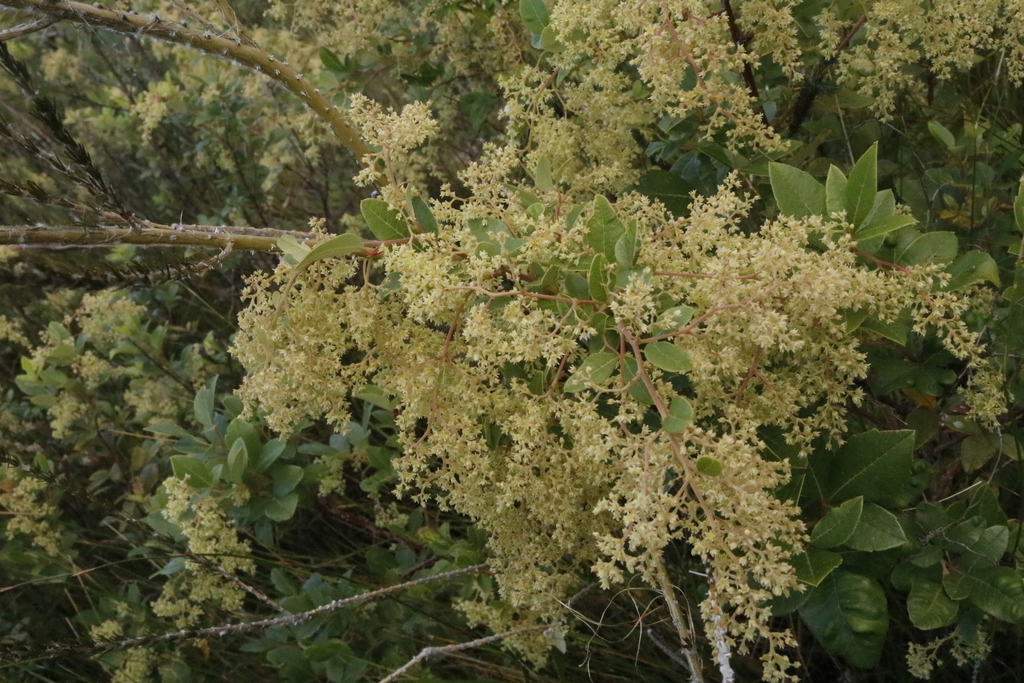
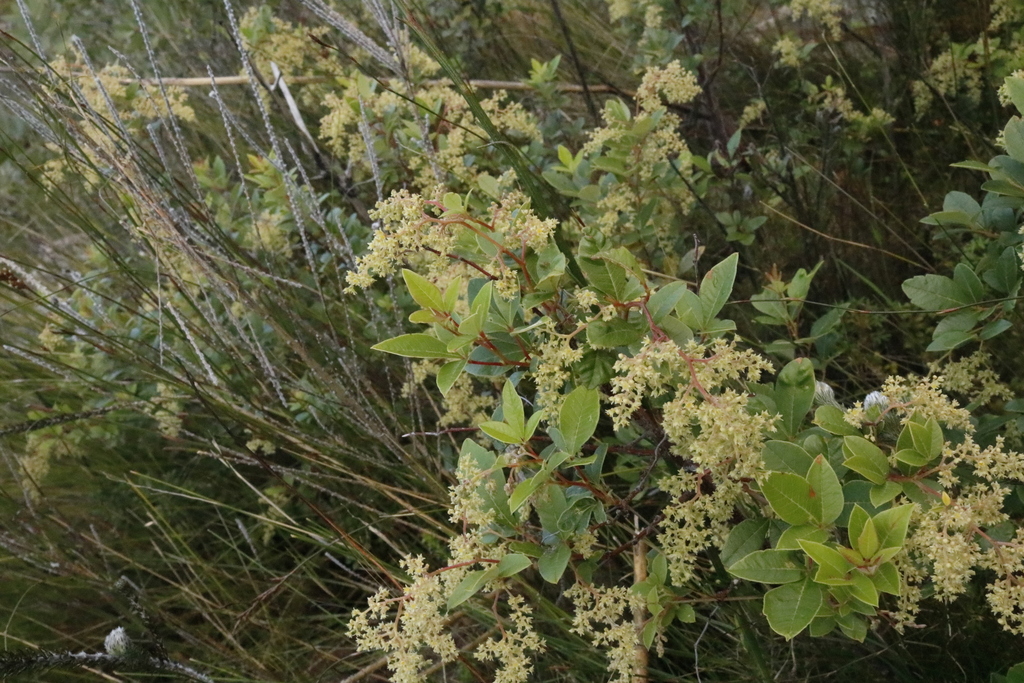
Identification: This plant typically grows up to around 5 meters tall and features dense, multibranched growth. Young branches are usually red-hairy, maturing to smooth grey-brown bark. Its leaves are trifoliate, with leathery leaflets that are green above and helically hairy (tomentose) beneath. It bears small, unisexual flowers in dense clusters, followed by globose, grey-tomentose drupes (fruits), giving it that “bicolour” foliage-and-fruit appearance.
Habitat: Bicolour Currantrhus thrives across a wide range of conditions—from rocky slopes and forest margins to grasslands and scrubland edges. Its natural distribution spans the Cape Peninsula, Cederberg, Drakensberg foothills, KwaZulu-Natal, Transkei, Ciskei, and parts of Zimbabwe, making it well-adapted to various South African ecosystems, especially montane and forest-edge environments.
Medicinal Uses: While extensively used in tanning due to its high tannin content, medicinal uses are more limited. The bark, roots, branches, and leaves are rich in tannins and have historically been used in traditional medicine as astringents for treating skin conditions, wounds, and superficial inflammation. The fruits are edible but considered unpalatable, limiting their internal use in healing.
History: Bicolour Currantrhus has a longstanding history as a “workhorse” plant—valued for its tannins, dyes, and hardiness. Indigenous communities and early settlers used its bark for tanning, soap-making, and crafting rope. Its medicinal role was secondary, mostly utilized in folk remedies for skin and minor wounds. Despite its modest role in healing traditions, its ecological and practical importance has made it a noteworthy component of indigenous flora.