About: Cape Ash is an elegant and resilient evergreen or semi-evergreen tree native to southern Africa, including South Africa, Zimbabwe, Mozambique, and parts of the eastern continent. Despite its common name, it is not related to true ash trees; rather, it belongs to the mahogany family. It is appreciated in both natural and landscaped environments for its graceful form and glossy foliage.
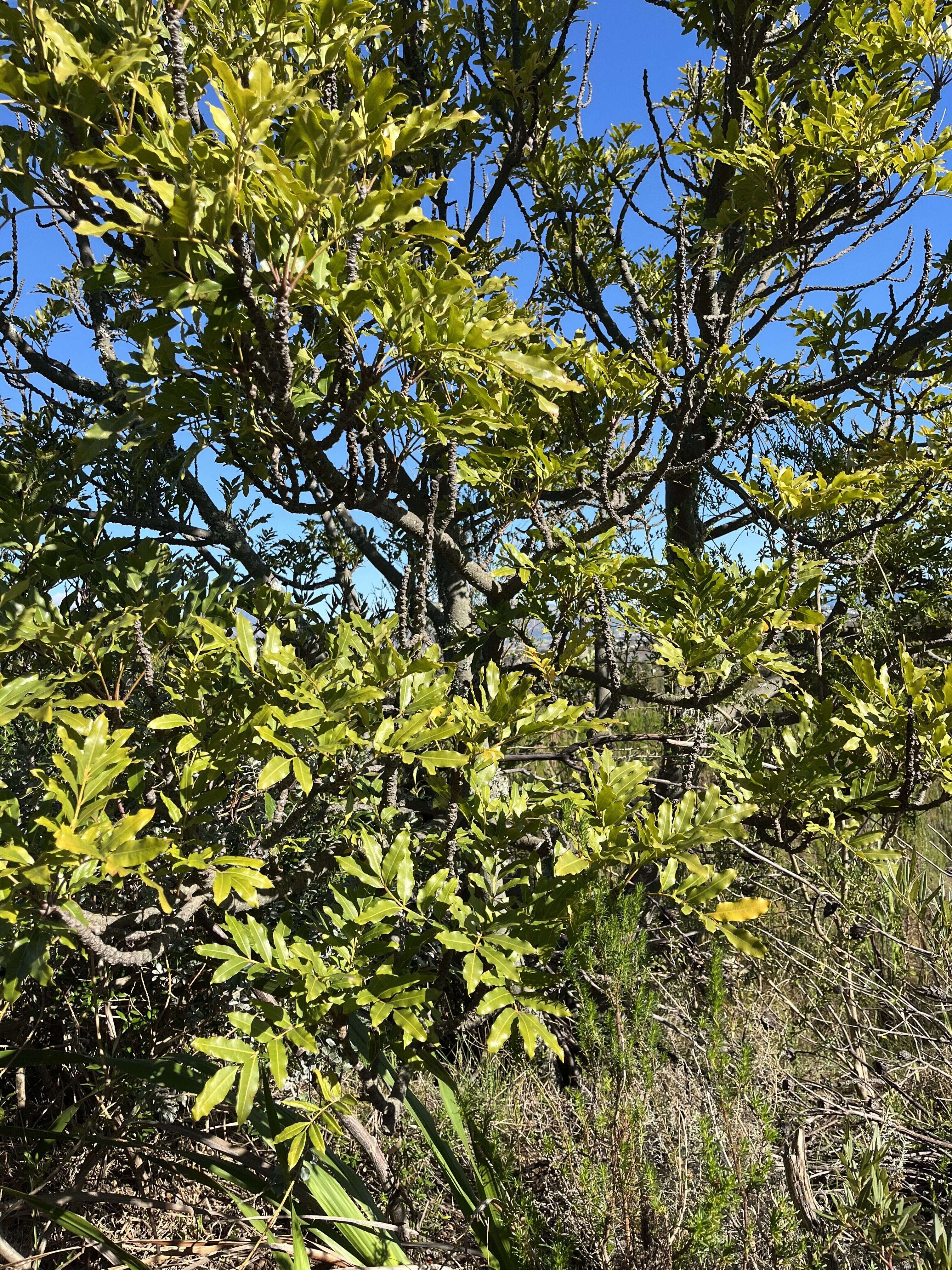
Identification: This tree grows between 10 to 30 meters tall with a straight trunk crowned by a rounded canopy. Its bark evolves from smooth grey on young trees to more fissured and textured on older specimens. It bears pinnately compound leaves with glossy, lanceolate leaflets arranged oppositely. In spring and early summer, it produces clusters of small, fragrant white to cream-colored flowers, followed by fleshy red berries that turn dark and spherical when ripe.
Habitat: Cape Ash thrives in diverse habitats such as riverine forests, woodland margins, and montane forests at altitudes ranging from lowlands to around 2,500 meters. It is found throughout South Africa's eastern provinces, adapting well to both sunlight and partial shade, and is often used as an effective street or shade tree.
Medicinal Uses: In traditional African herbal medicine, Cape Ash is valued for its healing properties. The bark, leaves, roots, and fruits are used to treat various ailments:
Bark and roots: Decoctions are used for headaches, dysentery, and heartburn. Ground bark is used as a disinfectant, and in some cultures, as an emetic to induce vomiting in poisoning cases.
Leaves: Used to relieve chronic coughs and headaches; they are also employed as purgatives and anthelmintics (to expel parasitic worms).
Fruits and leaves: Applied topically for skin conditions, including boils, rashes, and pimples, often as a flour or poultice.
History: Cape Ash has been an important component of traditional healing practices among various African communities for generations. In Transkei (Eastern Cape), the bark has served as a disinfectant and remedy for infertility and heart-related ailments. Among the Sotho, roots are used for headaches and dysentery, while the Vhavenda use leaves for chronic coughs and headaches. Beyond its medicinal value, Cape Ash has also been valued for its durable timber and ecological contributions as a shade tree.