Sea
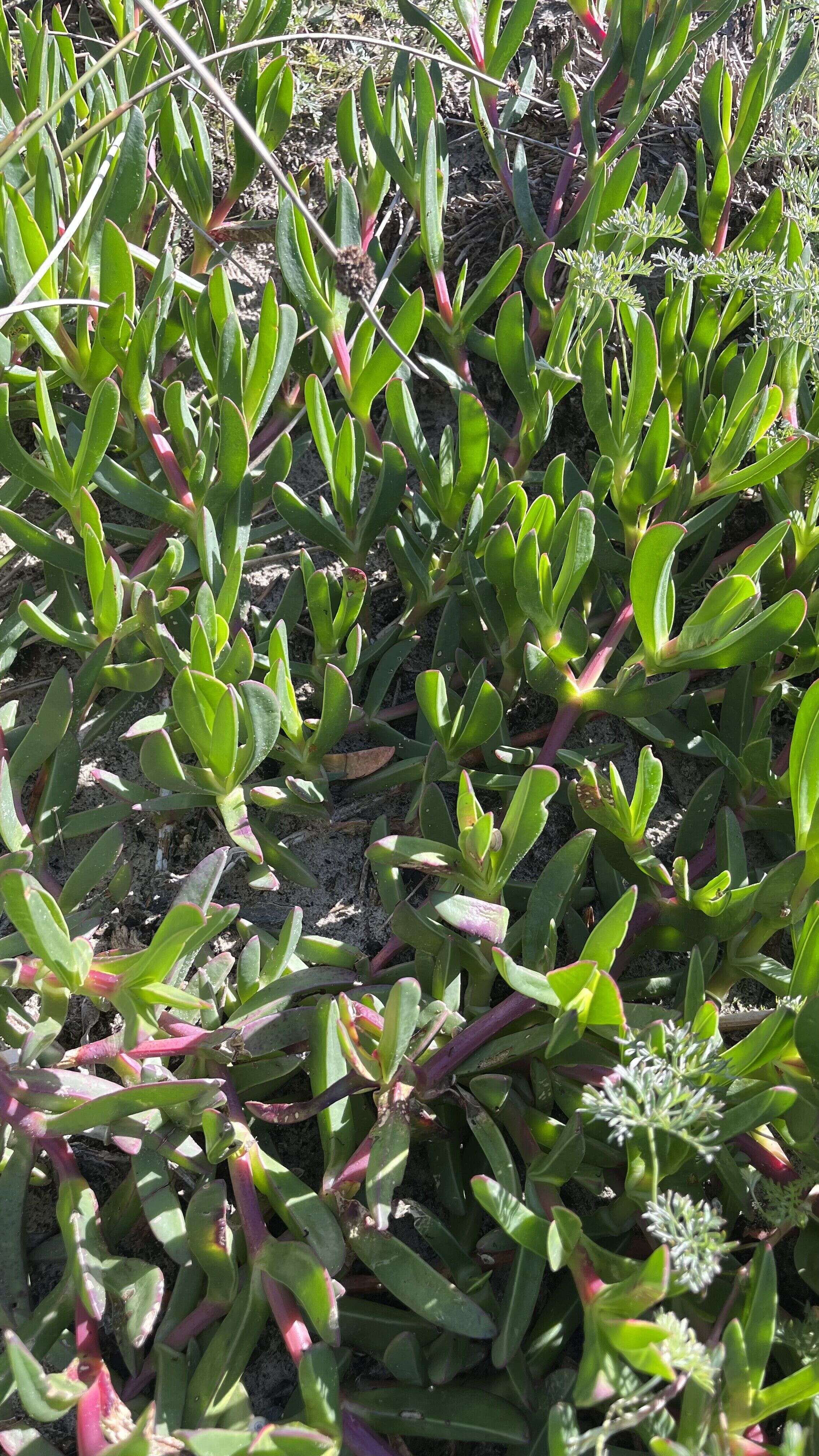
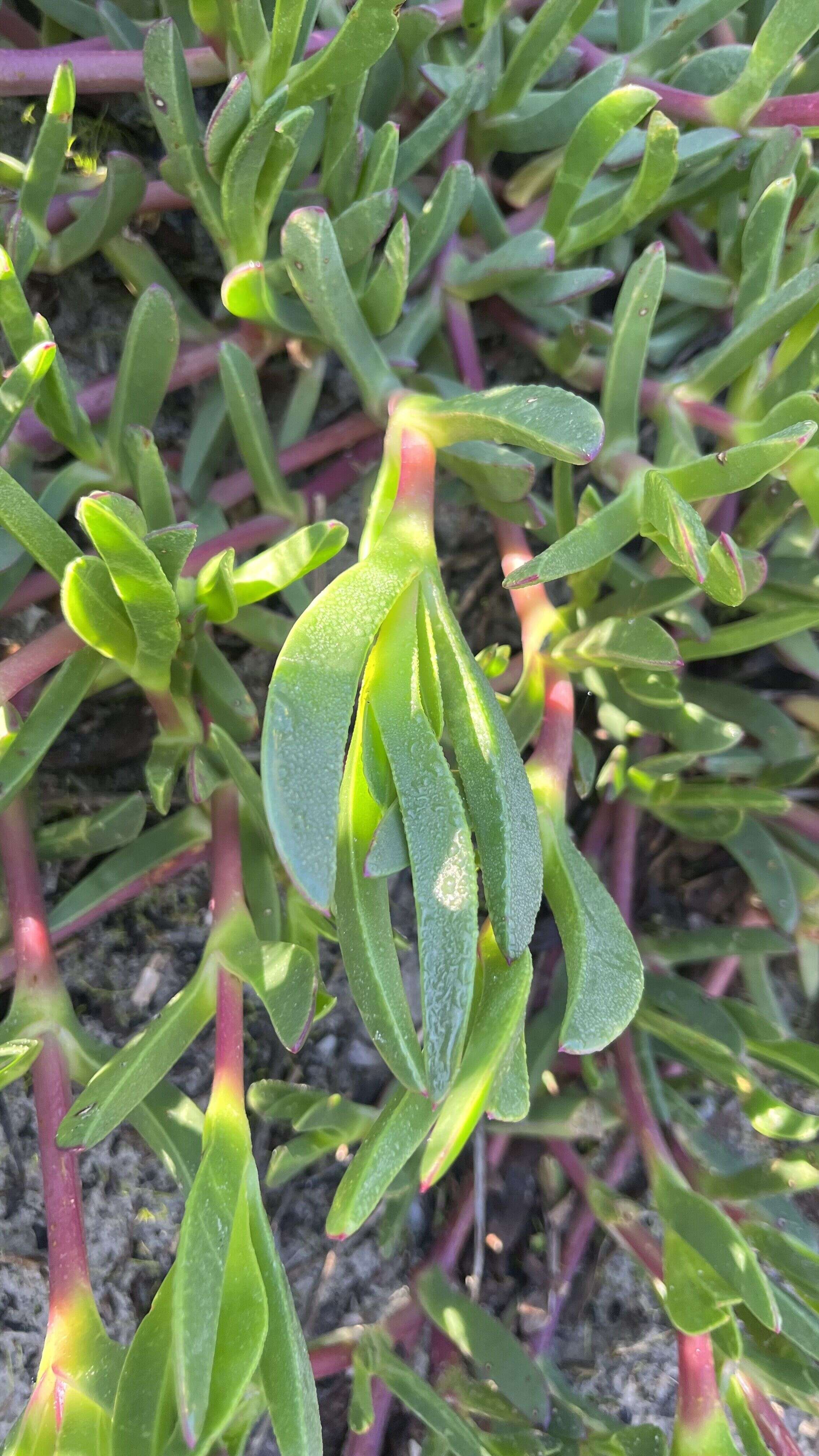
About: Iceplant is a succulent groundcover native to South Africa and Namibia, now found in many dry, coastal regions around the world. It's named for the glistening, bladder-like cells on its leaves that look like tiny ice crystals. This plant has been used both as food and medicine in indigenous cultures. Although sometimes considered invasive in non-native areas, it is valued for its salt tolerance, soil-binding roots, and edible parts.
Identification: Iceplant is a low-growing succulent with fleshy, green leaves that are covered in large, glistening bladder cells. These give the plant a shiny or "frozen" appearance. The leaves are usually oval to spoon-shaped and can turn reddish in dry conditions. The flowers are daisy-like, white to pink, and bloom in spring and summer. The stems sprawl along the ground and may root at nodes.
Habitat: Iceplant grows best in sandy or saline soils, especially along the coast. It thrives in full sun and poor soil, making it common on dunes, roadsides, disturbed land, and rocky slopes. In South Africa, it is found along the western and southern coasts, particularly in the Western Cape.
Uses: Both the leaves and flowers are edible. The leaves have a mild, slightly salty, tangy flavour and can be eaten raw in salads, pickled, or lightly cooked. They are also used in traditional medicine for treating wounds, inflammation, and as a mild diuretic. The plant is being researched for its potential use in phytoremediation and its high mineral content.
Harvesting Tips: Pick fresh, young leaves in the morning when the plant is full of moisture. Choose leaves that are firm and plump, avoiding any that look shriveled or overly red. Rinse well to remove any sand or surface salts. Harvest in moderation to avoid damaging the root system, especially in the wild.
Fun Fact: The glittery "ice" on the plant's surface isn't frost — it's made up of bladder cells that store water and salt, helping the plant survive in salty, dry environments. These cells are so efficient that scientists have studied them for ideas in water conservation and salt filtration technologies.