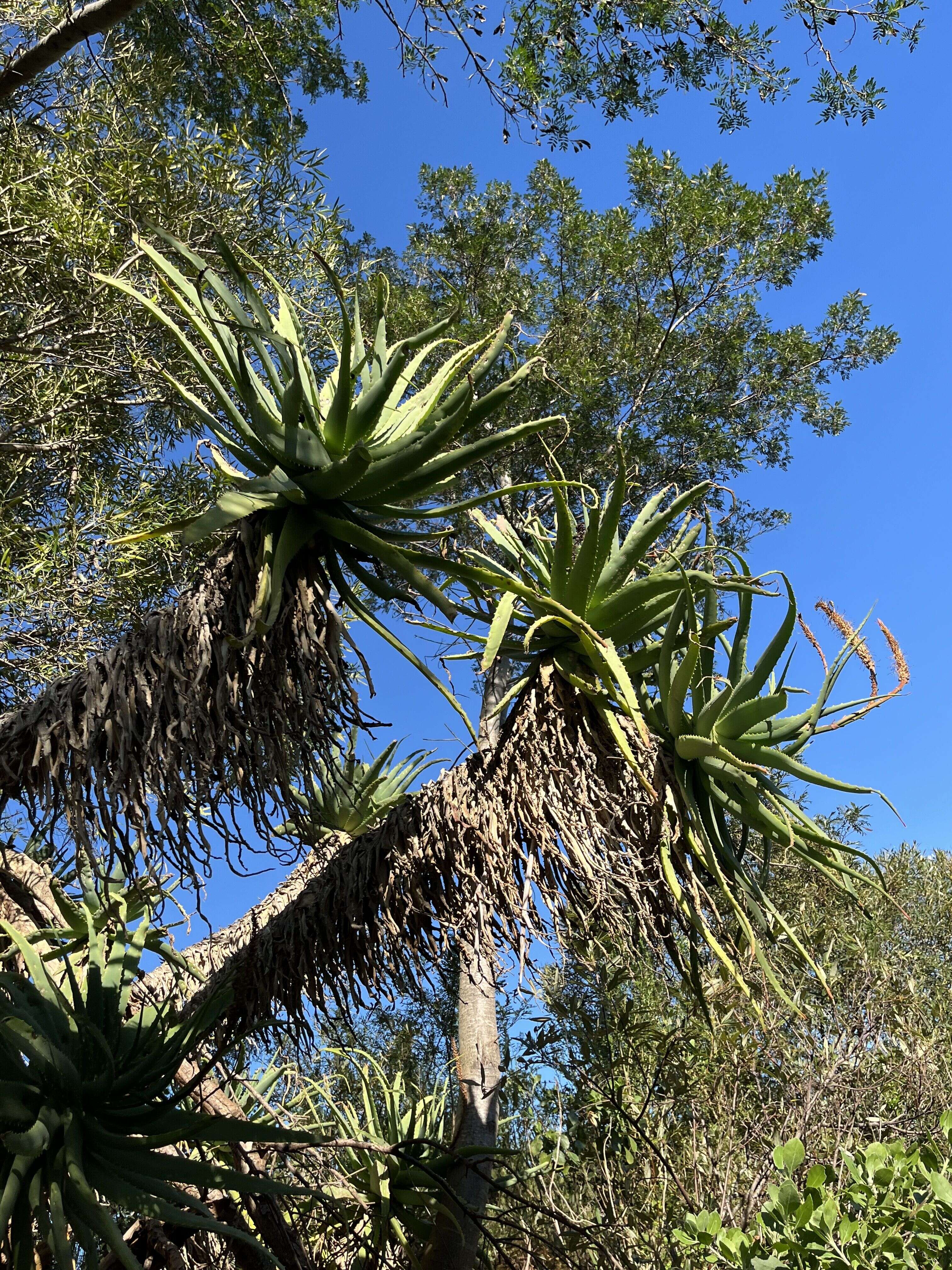
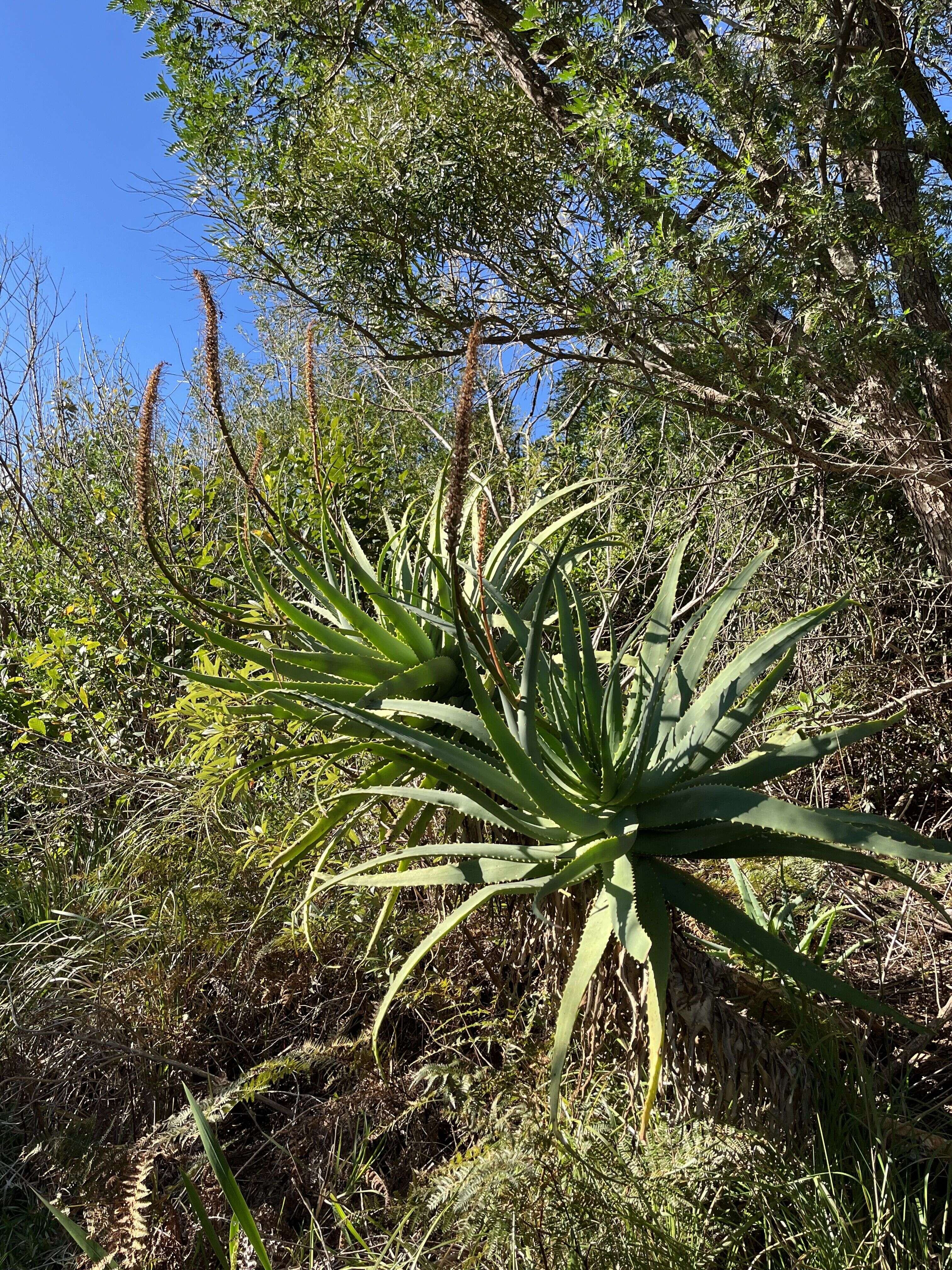
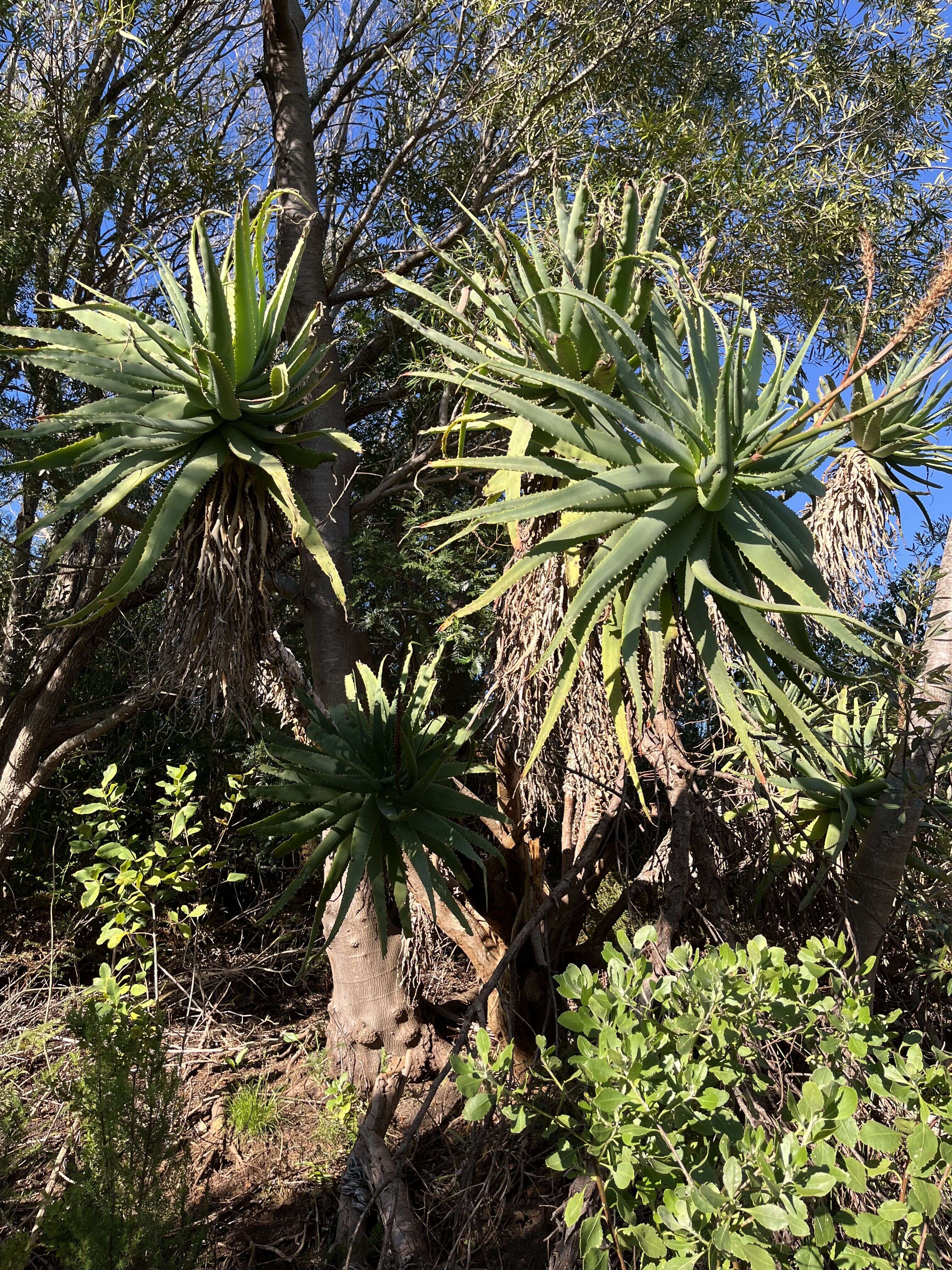
About: Krantz Aloe is a robust, multi-branched succulent—a striking and resilient plant native to southeastern Africa, including regions of South Africa, Mozambique, Zimbabwe, and Malawi. It forms dense rosettes and displays vibrant orange-red to yellow flowers during winter, making it both ornamental and ecologically important, as it attracts nectar-feeding birds and insects.
Identification: This aloe can grow between 2–3 meters tall and wide, appearing almost tree-like. It has slender, spiny, yellow-green leaves arranged in rosettes atop a branched woody stem. These leaves often display serrated margins and can take on a reddish tint during drought or colder seasons. Flowering stalks rise above the foliage, bearing tubular clusters of bright, nectar-rich blossoms.
Habitat: Krantz Aloe is highly adaptable and thrives in environments ranging from rocky ridges and mountainous outcrops to coastal and bushy areas. It spans habitats from sea level to high-altitude sites. In South Africa, it's found along the eastern seaboard—from the Cape Peninsula through KwaZulu-Natal up toward Mozambique, Zimbabwe, and Malawi.
Medicinal Uses: Krantz Aloe is renowned for its strong medicinal value, often considered more potent than Aloe vera. Its leaf gel and sap have been traditionally used to soothe burns, heal wounds, relieve skin conditions (like eczema and psoriasis), and treat stomach issues such as ulcers and constipation. Its antimicrobial, anti-inflammatory, and possible anticancer properties are recognized across many cultures. It has also seen use as an immune booster and general tonic.
History: Among the earliest aloes to reach European gardens in the 17th century, Krantz Aloe was first cultivated in Cape Town's botanical garden and grown in Amsterdam by the early 1700s. Indigenous peoples like the Zulu used it as a protective and healing plant—powdered leaves were burned to ward off storms, and leaf decoctions were applied in childbirth and given to livestock to stave off illness. It has since earned a firm place in both traditional and modern herbal medicine.