Land

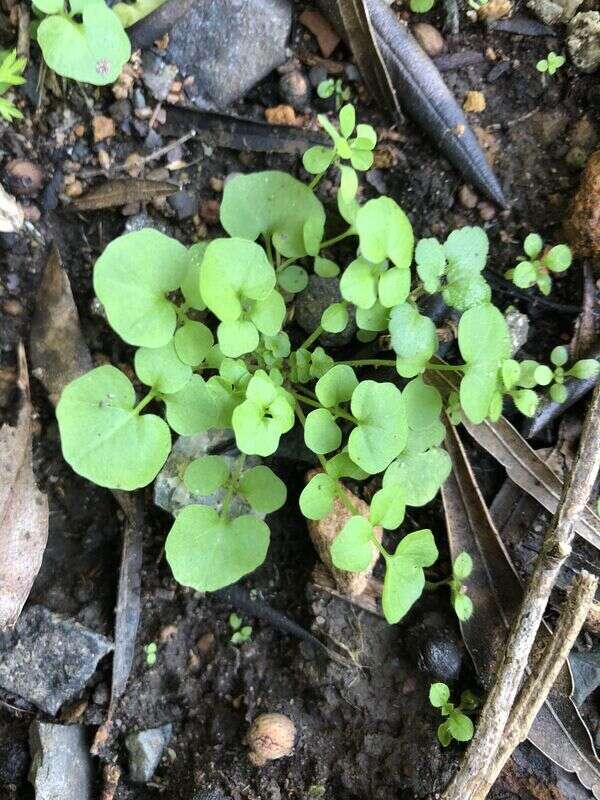
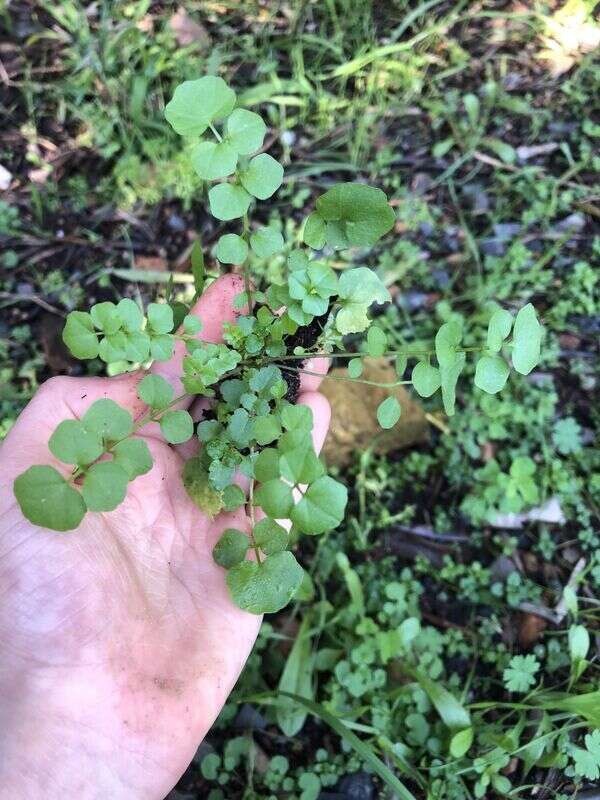
About: Bittercress is a small, fast-growing wild plant that belongs to the mustard family. It is often found in gardens, lawns, and disturbed ground, especially during cooler months. Though small, bittercress is entirely edible and has a mild peppery taste, making it a popular wild green among foragers. It grows quickly and is known for its explosive seed pods, which shoot seeds when touched — hence names like "flickweed" and "shotweed."
Identification: Bittercress is a low-growing plant forming a small rosette of pinnate leaves, each with several rounded leaflets. It produces tiny white, four-petaled flowers on slender stems, usually in early spring or late winter. Its seed pods are long and thin and will explosively eject seeds when touched, a feature that gives it the nickname "shotweed."
Habitat: Bittercress thrives in moist, disturbed soils—especially in garden beds, lawns, cracks in pavements, and the edges of paths. It grows well in cool, shady to semi-shady conditions and is commonly found across temperate regions in South Africa.
Uses: The young leaves and stems of bittercress are edible and have a mild, peppery flavor, making them perfect for salads, sandwiches, pestos, and as a garnish. It's rich in vitamins A and C and contains beneficial minerals. Though less used in traditional medicine, its mustard family roots mean it may share some mild anti-inflammatory properties.
Harvesting Tips: Harvest bittercress when young and tender, before the plant flowers and seeds. Use clean scissors to snip leaves close to the base. As the plant matures quickly, revisit the area regularly for new growth. Always wash thoroughly before eating, especially if harvested near roads or human activity.
Fun Fact: Bittercress seed pods are explosively dehiscent, meaning they burst open and shoot seeds up to a metre away when touched. This clever survival trick helps the plant spread rapidly and is why bittercress is often one of the first weeds to show up in freshly turned garden soil.