Sea

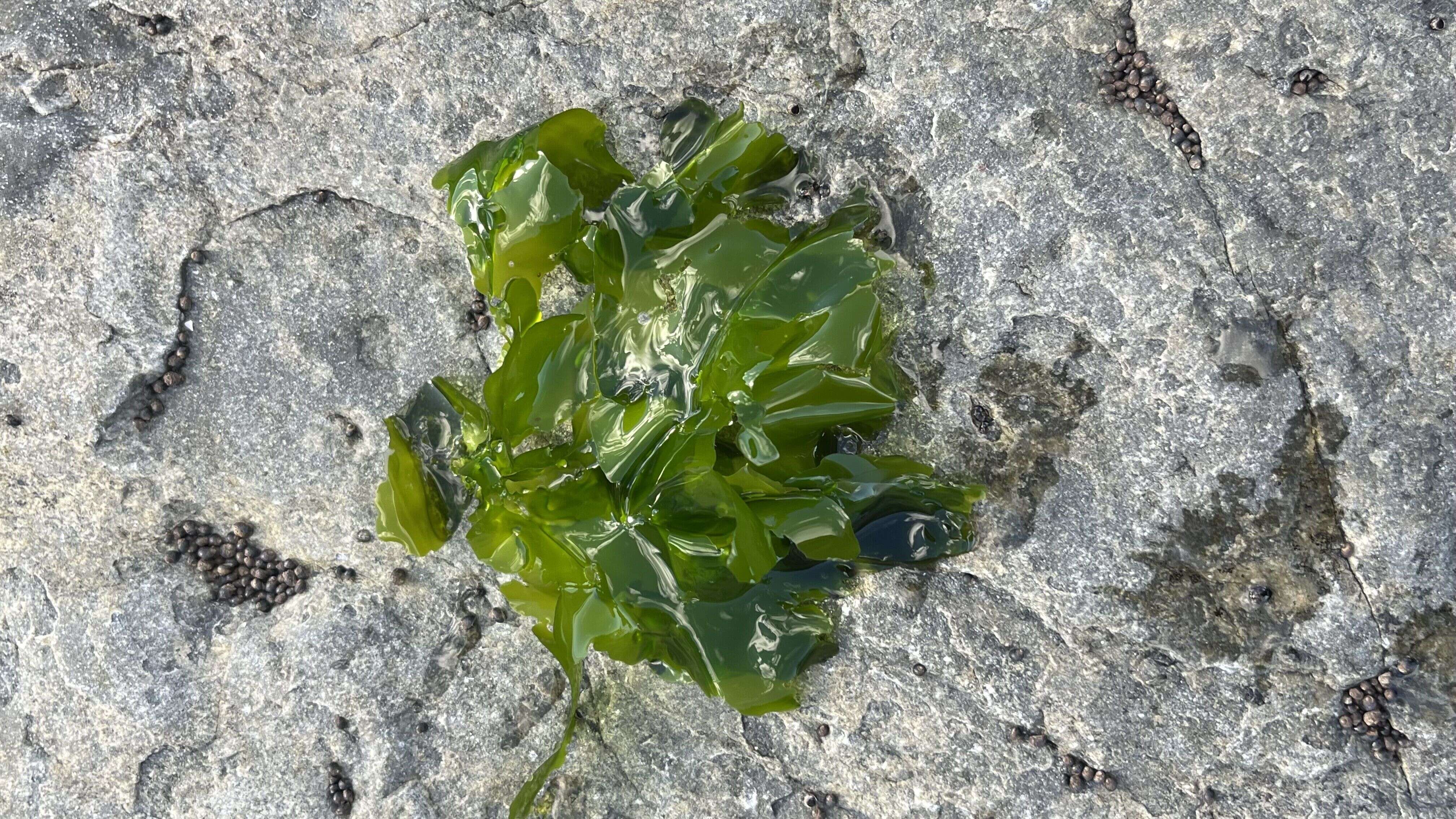
About: Sea Lettuce (Ulva lactuca) is a common green seaweed found in coastal areas around the world, including South Africa. It is named for its bright green, leafy appearance that resembles garden lettuce. It is edible and highly nutritious, traditionally eaten in many cultures. Sea Lettuce also plays an important ecological role, providing food and shelter for marine life and helping absorb excess nutrients in coastal waters.
Identification: Sea Lettuce forms thin, delicate, translucent green sheets or blades that are flat, soft, and wavy, often only one or two cell layers thick. The blades are usually between 10 and 30 cm across, though they can grow larger. The colour is a bright or dark green, depending on light exposure and nutrient availability. It attaches to rocks or shells using a small holdfast, and can often be found floating freely if detached.
Habitat: Sea Lettuce is found in intertidal and shallow subtidal zones, often in rocky coastal areas, tidal pools, and estuaries. It thrives in nutrient-rich waters, especially those with some degree of freshwater runoff, and is commonly seen during spring and summer. It grows along most of South Africa's coastlines, especially where there is wave action and good sunlight.
Uses: Sea Lettuce is edible and can be used raw in salads, dried into flakes, or cooked in soups and stir-fries. It is rich in protein, iron, iodine, and vitamins A and C. In traditional and modern natural medicine, it's sometimes used for its detoxifying and mineral-replenishing properties. Sea Lettuce is also used in aquaculture as a natural food source for abalone and other marine animals, and as a bioindicator of water quality due to its sensitivity to pollution.
Harvesting Tips: Always harvest Sea Lettuce from clean, unpolluted areas, away from harbours, sewage outlets, or stormwater drains. Look for fresh, bright green blades attached to rocks or floating near shore. Rinse thoroughly with clean seawater or fresh water to remove sand, debris, or small marine organisms. If drying it for later use, spread it in a thin layer in a shaded, well-ventilated area until crisp.
Fun Fact: Sea Lettuce is so efficient at soaking up nutrients that in areas with high agricultural runoff, it can form large green blooms—sometimes called "green tides." While this shows how fast it grows, it also highlights how sensitive it is to water pollution, making it a natural early warning system for coastal ecosystems.