Land

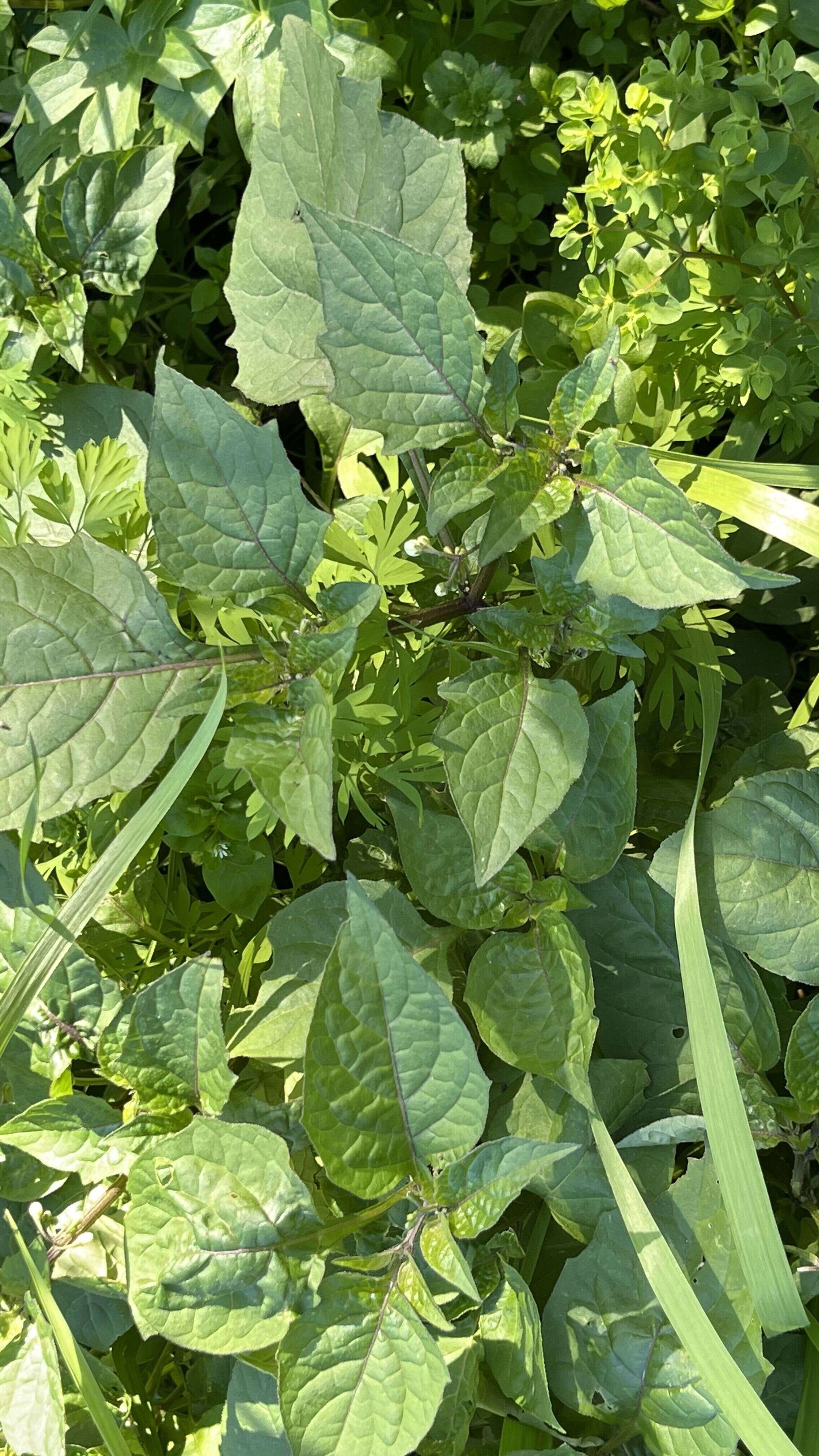

About: Black Nightshade is a widespread annual or short-lived perennial herbaceous plant that is both weedy and useful. It has a long history of traditional use in many cultures, including in South Africa, where the ripe berries and young leaves are eaten in some regions. While the plant has toxic potential, particularly when unripe or improperly prepared, it has been safely consumed for centuries in many parts of the world. It is not the same as the highly poisonous Deadly Nightshade (Atropa belladonna).
Identification: Black Nightshade typically grows 30–100 cm tall. It has ovate, soft green leaves with wavy or slightly toothed edges. The small flowers are white with yellow stamens, resembling small stars, and are arranged in loose clusters. The berries start off green and ripen to a shiny black or deep purple-black. The plant is often confused with other wild nightshades, but Solanum nigrum can be distinguished by its smooth, non-hairy leaves and its berries that hang in small drooping clusters.
Habitat: This species is found in disturbed areas such as gardens, roadsides, crop fields, and waste ground. It prefers full sun and moist, fertile soil but is tolerant of drought and poor conditions. It is common throughout South Africa, especially in summer rainfall regions, and grows as a weed in both rural and urban environments.
Uses: In some African countries, including South Africa, the cooked leaves and ripe berries are eaten as part of traditional diets. The leaves are usually boiled in several changes of water to reduce bitterness and any remaining toxins. The ripe berries are sweet and eaten raw or cooked, but unripe (green) berries should not be eaten, as they can be toxic. Medicinally, the plant has been used in traditional remedies to treat inflammation, pain, and skin conditions, but its use should always be cautious and knowledgeable due to potential toxicity.
Harvesting Tips: Only harvest young leaves and fully ripe, black berries. The leaves must be well-cooked (boiled and drained) before eating. Avoid using plants growing near roads or contaminated soils. Never eat unripe berries or raw leaves, as they may contain higher levels of solanine and related alkaloids. If in doubt, consult a local expert or foraging guide.
Fun Fact: Despite its scary-sounding name, Black Nightshade has been cultivated in some traditional African gardens for generations and is part of a group of leafy vegetables known as "morogo" in Southern Africa. In fact, in many rural areas, it is considered a staple green—proof that not all nightshades are created equal.