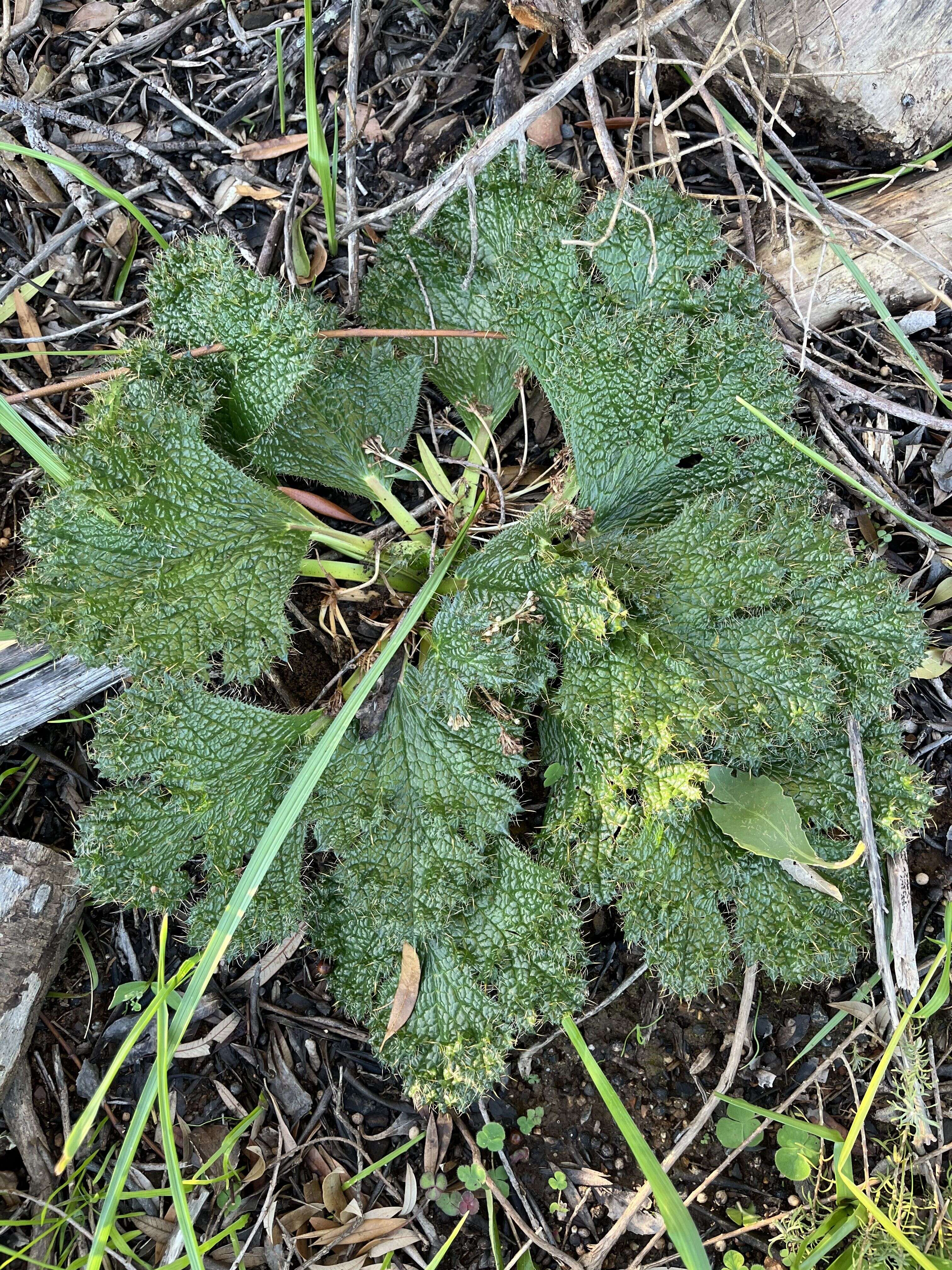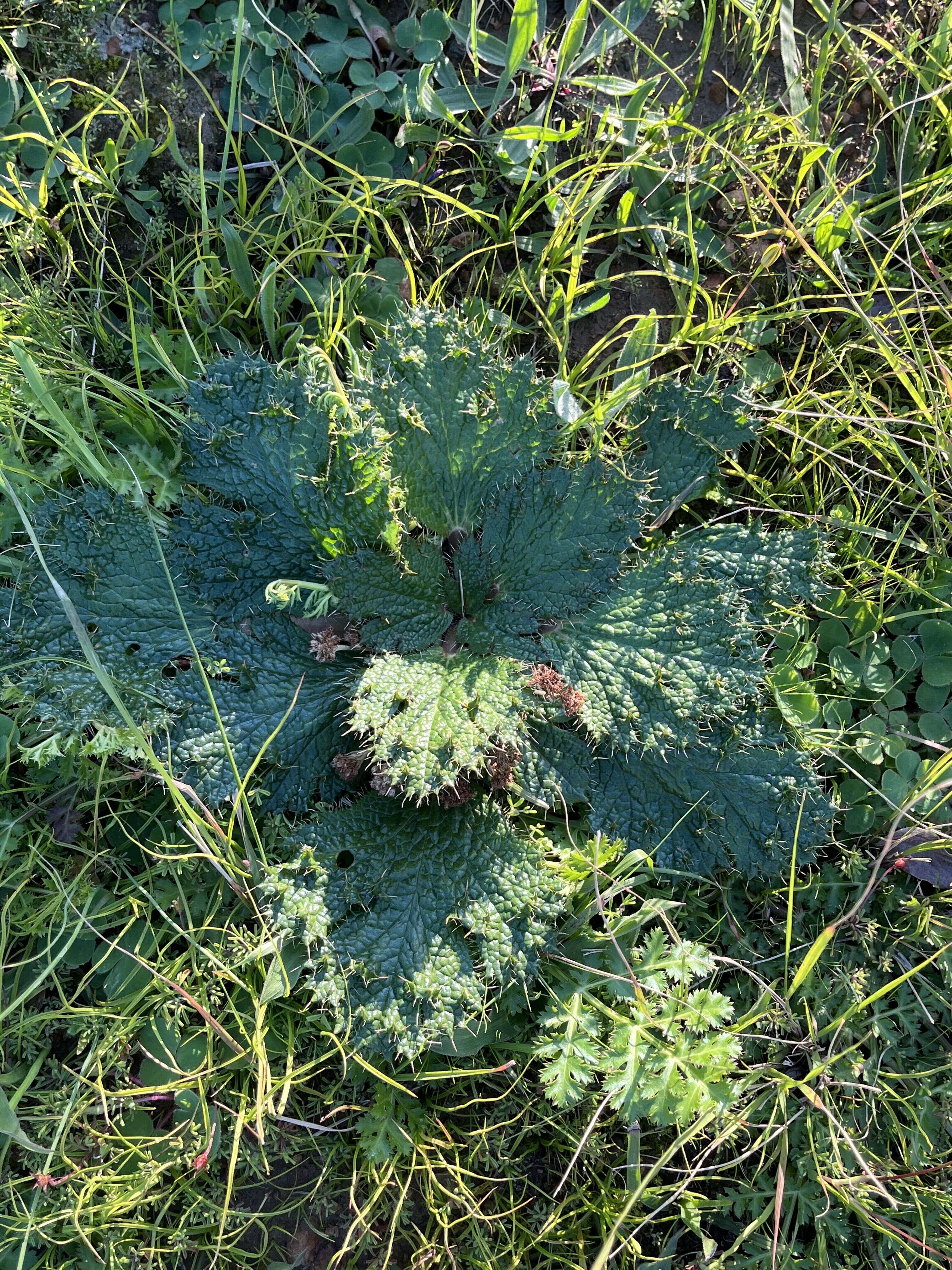
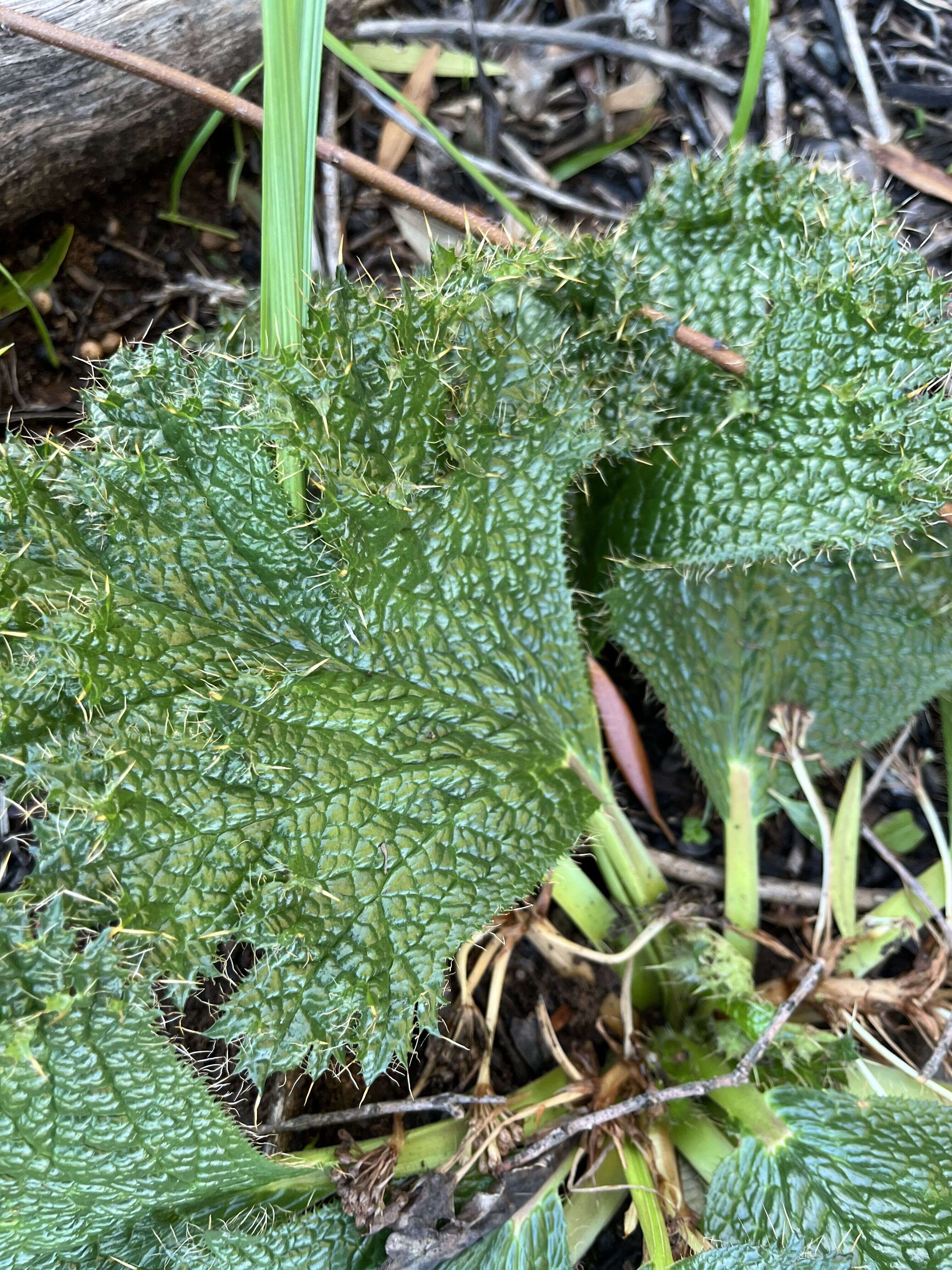
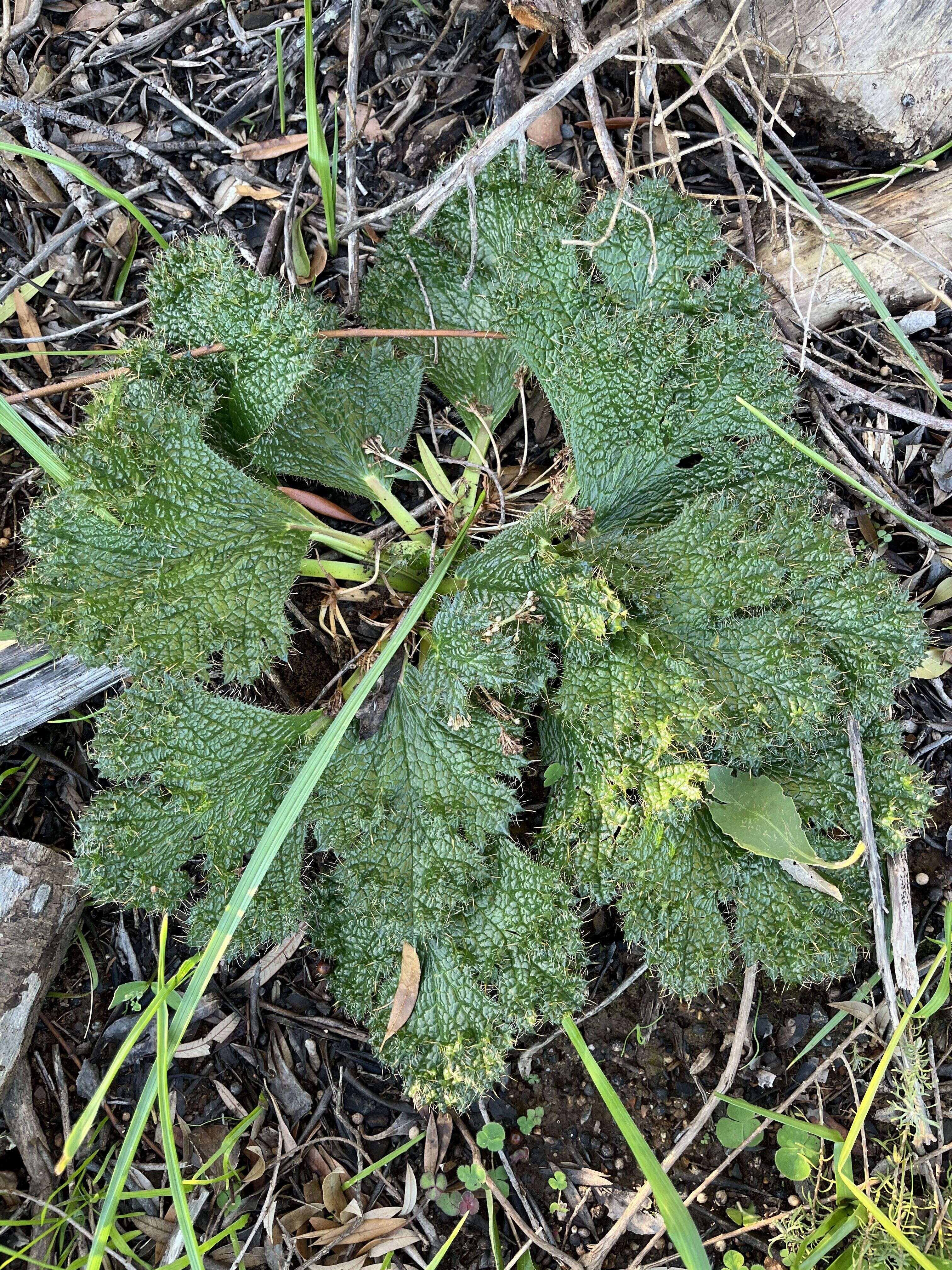
About: Arctopus echinatus is a distinctive, low-growing perennial native to the Cape Floristic Region of South Africa. Known as Bear's-foot for its broad, spiny leaves that resemble a bear's paw, it is locally called sieketroos (comfort to the sick) in Afrikaans—reflecting its long history as a medicinal plant.
Identification: This acaulescent herb forms a flat rosette up to 60 cm in diameter and about 6 cm high. The leaves are diamond- or ovate-shaped, prostrate, and crowned with sharp recurved spines along the margins. A sticky, tuberous root exudes a resinous substance when broken. Male and female flowers sit on separate plants—males have cream-colored flowers on short stalks, while females bear greenish flowers nestled within spiny bracts.
Habitat: Bear's-foot thrives in seasonally moist sandy soils, granite flats, and slopes within the winter-rainfall zones of South Africa—from Nieuwoudtville through the Cape Peninsula to Port Alfred. It is common across numerous fynbos types, renosterveld, and strandveld habitats, especially in places with well-drained ground and openness to sunlight.
Medicinal Uses: Arctopus echinatus has a diverse medicinal profile. Its tuberous root has traditionally been prepared as decoctions, infusions, or tinctures and used as a blood purifier, demulcent (soothing agent), diuretic, purgative, sedative, and general remedy for ailments including coughs, tuberculosis, bladder issues, epilepsy, venereal diseases, skin irritations, and ringworm.
Scientific studies have shown that root extracts contain diterpenoids, phenolic acids, and resins and exhibit antibacterial, antifungal, and GABAA receptor–binding activity, supporting its sedative and anti-infective uses.
History: This plant was long known and used by the Khoi-San people and later adopted by early Cape Dutch settlers. Referred to as sieketroos, it was esteemed for its healing properties. From the 17th century onward, it formed part of local herbal pharmacopeias and folk medicine traditions.